
Let’s start with something simple: what’s on your table tonight?
Perhaps a bowl of steaming jasmine rice, topped with stir-fried chicken, or smoky Korean BBQ grilled right at your table. Perhaps you’re slurping pho in a cosy Vietnamese spot or mixing pad Thai with a squeeze of lime.
Whether you’re eating at your neighbourhood takeaway, your go-to pan Asian restaurant, or preparing for yourself at home, Asian cuisine has likely become a larger part of your repertoire than you’re aware.
But beneath the sauces and spices is something more, foundations that are rooted firmly in place, technique, and cultural rhythm.
A story not one of fusion, but of comprehension.
Table of Contents
Top 4 Favourite Asian Dishes
Rice
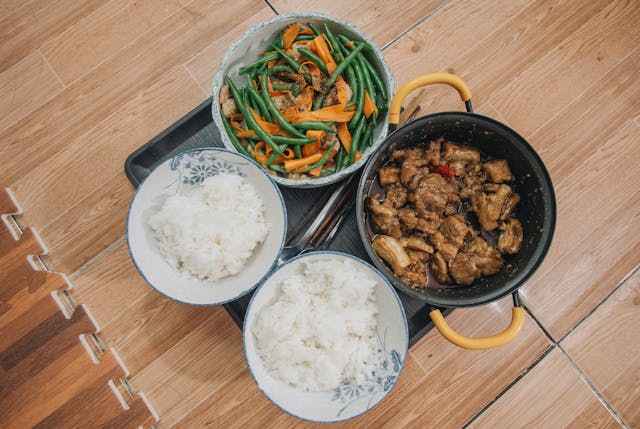
Rice isn’t just a side dish; it’s a lifestyle. Across most of Asia, rice is the main attraction, almost godlike in its presence. In Japan, it’s sticky and refined, plain with no fanfare. That’s the concept—pure, silky, and natural. Each grain is for a reason. Jasmine rice contributes aroma and texture to Thai or Vietnamese dishes. In China, especially in the south, white rice is the staple, served to counteract salty stir-fries and oily sauces.
What’s easy to take for granted, though, is how rice organises the meal, not just sitting beside it. It’s often the platform upon which flavour is built. Think of Hainanese chicken rice, where the rice is cooked gently in the chicken-poaching stock. It’s full but low-key, and somehow more intimate than any sauce.
You only notice rice when it is done poorly. Too mushy, too dry—it spoils it all. But nicely cooked rice vanishes and improves everything else.
Noodles
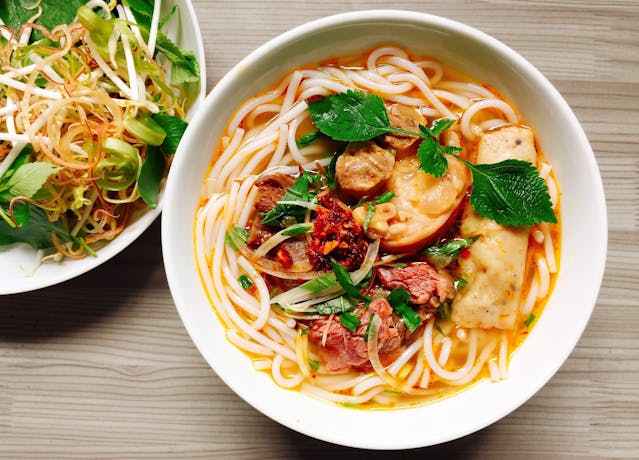
While rice is subtle, noodles are showy. Noodles are playful, sloppy, chewy, and slurpy. Noodles have character, and each country seems to have its own accent.
In Japan, soba is nutty and restrained, served cold with dipping sauce. Ramen is the party animal—wavy, hot, and loaded with pork broth. Thailand teaches us about pad see ew, broad noodles stir-fried with dark soy and crispy greens. Vietnam offers bun, soft rice vermicelli cradled under grilled meats and herbs. China offers hand-pulled noodles, an art form in themselves—tossed, slapped, pulled until perfect.
The way that the noodles are eaten says something about the people who made them. Cold soba on a sweltering summer, warm pho on frigid winter, or spicy Korean ramyeon late at night—it’s not hunger. It’s timing, ritual, and comfort.
The best pan Asian restaurants get this. They don’t just slop noodles on a plate. They build from the broth, the texture, the chopstick feel. And when you get it all in one bite—heat, acid, fat, crunch—it stays with you.
BBQ
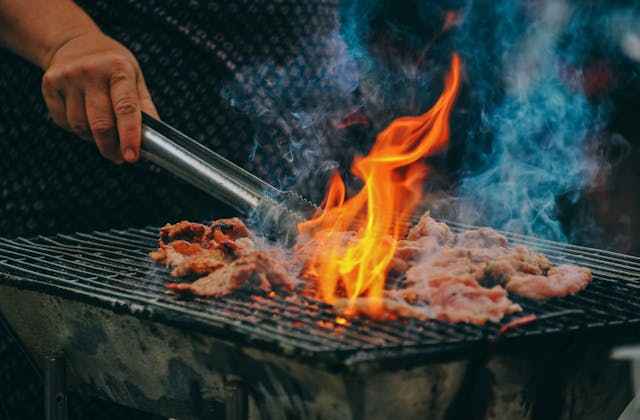
Asian barbecue is less about sauce and more about approach. It’s about fire and fat and waiting.
Korean BBQ is perhaps the most famous, with short ribs or pork belly seared at the table, served in lettuce with a dollop of fermented bean paste and garlic. But it’s not just dinner—it’s a social process. Everybody cooks it, flips it over for everybody else, and builds the perfect bite.
In China, lamb skewers flavoured with cumin and chilli are popular street food in the north. Yakitori restaurants in Japan broil skewers of all possible pieces of chicken, lightly seasoned with salt or tare sauce.
There are also Filipino inihaw, Thai gai yang (grilled chicken), and Vietnamese lemongrass- and sugar-marinated pork chops, caramelising over hot coals.
The thread that runs through? BBQ is social. It causes you to linger. You wait. You talk. You smell the smoke. That crossroads—of food and time, individuals and flame—is not one that you rush by. It’s this which has seen BBQ move from back alley kiosks to mainstream status in several high-end pan Asian restaurants.
The Modern Table
We are in an era in which menus are mashing up miso and mango, ketchup and kimchi. Foods cross oceans, sometimes forgetting where they started in the process. Sushi on a plate in London is not sushi on a plate in Tokyo, and that is not a bad thing. The best meals don’t try to fake authenticity; they translate it smartly.
That’s what sets an Asian restaurant worth returning to apart. It doesn’t put everything under an umbrella “Asian” category. It respects the pillars—rice, noodles, BBQ and adds to them wisely.
A great chef’s ear is attuned to when tradition must be honoured and when it must be flexed. Adding Thai basil to a ramen broth is not rule-breaking if you understand why it’s successful.
Using jasmine rice instead of brown rice is not betrayal—it’s a preference. And maybe it’s what the new eater is drawn to: someone curious, adventurous, craving flavour and significance.
Dinner with Curiosity
So what’s for dinner?
You can keep it plain: grilled fish and hot rice and a side of pickles. You can try something new, order the noodles you can’t even pronounce or ask for extra chilli even though you’re not sure. You can sit at a BBQ table and swap tongs with your friends. Or order a small taste of everything, just to try.
The magic of Asian food is that it’s not one thing. It crosses countries, weather, and cultures. It’s built on method and memory. It feeds hunger and heritage.
And where you find it. It is at a street stall, your neighbourhood takeaway, or a stylish pan Asian restaurant, it greets you. Not to copy, but to connect.
What’s for dinner tonight? Is it more than just a meal on a plate? Could it be getting closer to understanding where it comes from and why it tastes the way it does?.